























Some time in the last decade, smartphone cameras stopped getting noticeably better. You do get more megapixels, telephoto and wide-angle lenses, and fancy image stabilisation with every new model, but you'd struggle to date a photo just from its quality like you used to. The photos I'm taking today look pretty much the same as they did in 2019.
Maybe that's why people have started paying for cameras that are deliberately worse. A few friends bought "Camp Snap" cameras recently: if you haven't seen one, they're basic digital cameras with no screen, made to look like a disposable. You point it at a thing, press The Button, and pray. You can find out how your pictures came out next time you transfer them off the thing. It comes with a few software filters for various "vintage" looks, and was originally made for kids going to summer camps that ban all screen-having devices (hence the name).[1][2] Adults nostalgic for disposables have since bought rather a lot of them.[2] They cost around £60 new.
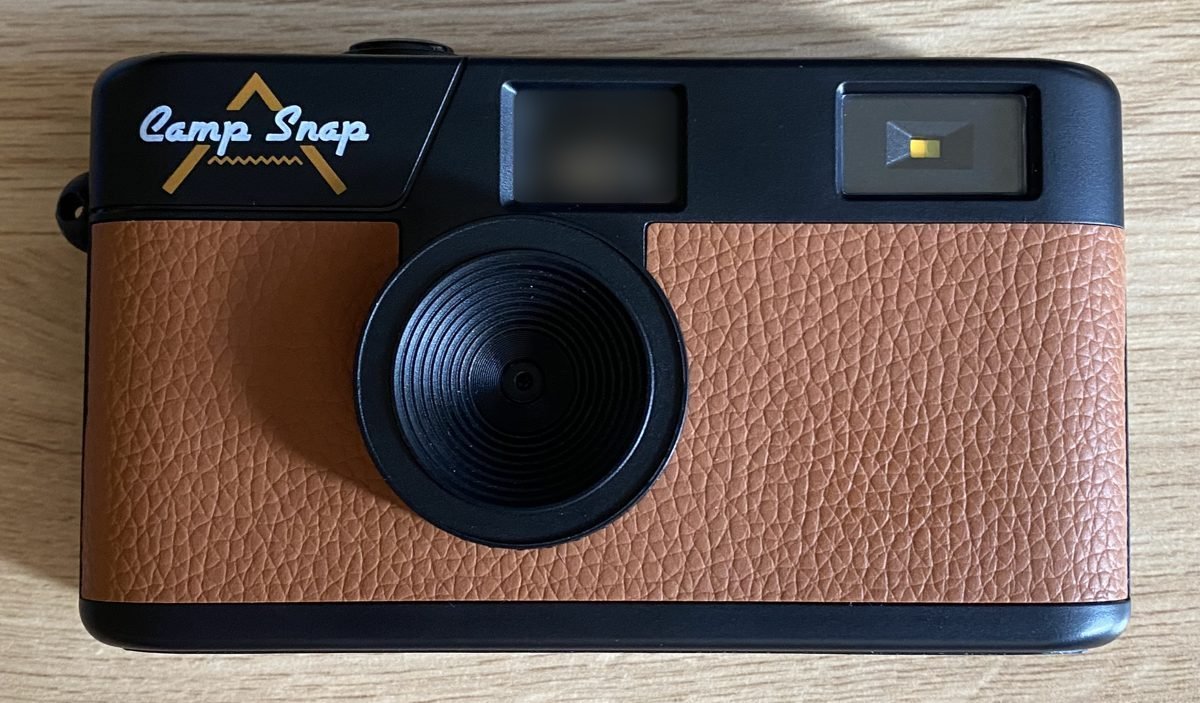
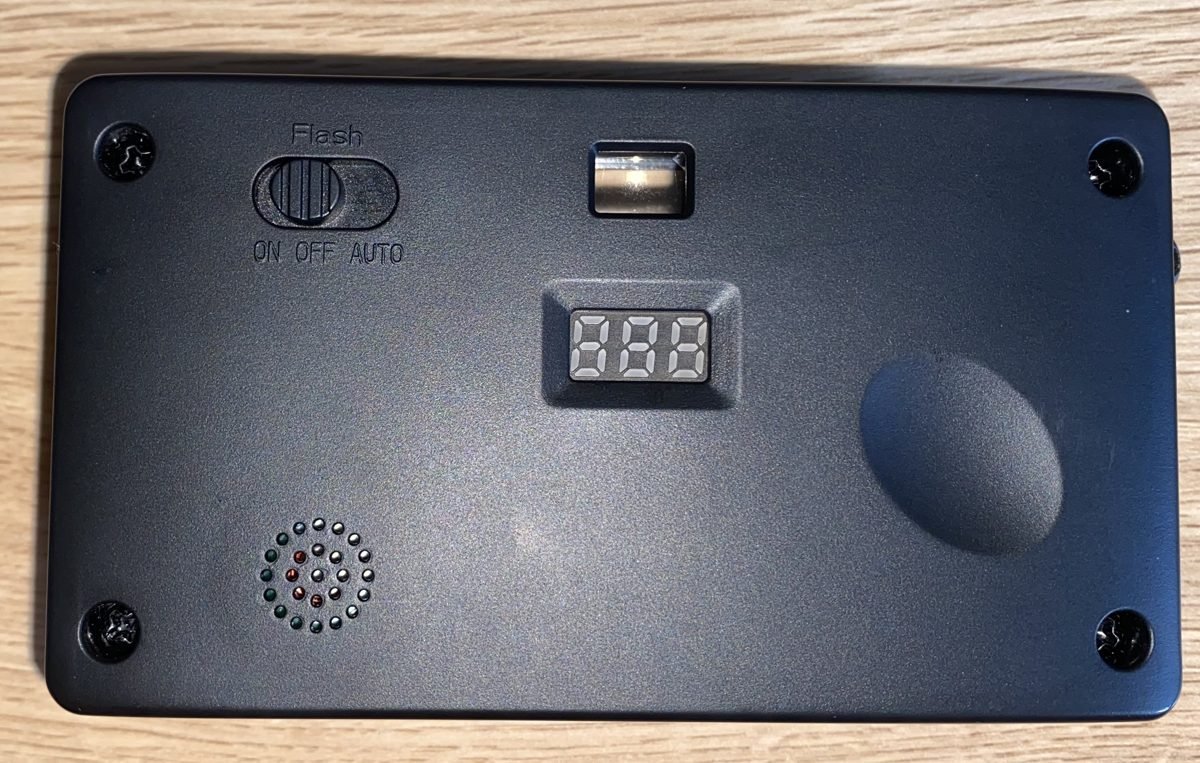
I've seen this before
The first time I saw one I got déjà vu. Twenty years ago every toy aisle bargain bin in the country had these tiny keyring digital cameras. (I have since learnt a factory fitted keyring is not the sign of professional photography gear.) They all had pretty much the same insides: a terrible low-res sensor, one AAA battery, a two-digit seven-segment counter LCD, about 2MB of storage, and a weird proprietary USB connector called "mini 4P". The counter would count down with every picture, starting at an uninspiring number like 14. As a kid I must have bought half a dozen over the years, every time telling myself this one couldn't possibly be as crap as the last. Here's one, though mine was fabulous translucent blue. Some came in gimmick versions too, like a full-size one with the same hardware inside but a clamp sealing "waterproof" case so you could take it underwater for... some reason. The damn thing would have floated anyway, it was 90% air.
It should come as no surprise then that I raised an eyebrow at Camp Snap's story. They say they made it because "there were no digital cameras available for kids that did not have a screen".[1] Good ones? Almost certainly not. But "screenless digital cameras for kids" definitely did exist, they were just next to the off-brand Lego and the breath mints rather than in the electronics department. If only someone had told them that their lack of screen was a selling point.
Their own blog says it started with the founder "3D-printing parts at the local library and tinkering away in the garage"[3], so I naturally wondered how much of that is still the garage project and how much is the same cheap insides in a nicer case. I asked Camp Snap how it's made, whether they designed the board or firmware themselves, how it compares to the old keychain cameras, and whether they were even aware of those. They didn't reply, so I borrowed one and took it apart.[4]
Teardown
The one I took apart is the original version 101 camera. Newer revisions have come out since I first wrote this article, including the Camp Snap 2[5] so some of this may have since changed. I haven't taken the new one apart yet.
After negotiating with a few screws, the case pops apart.
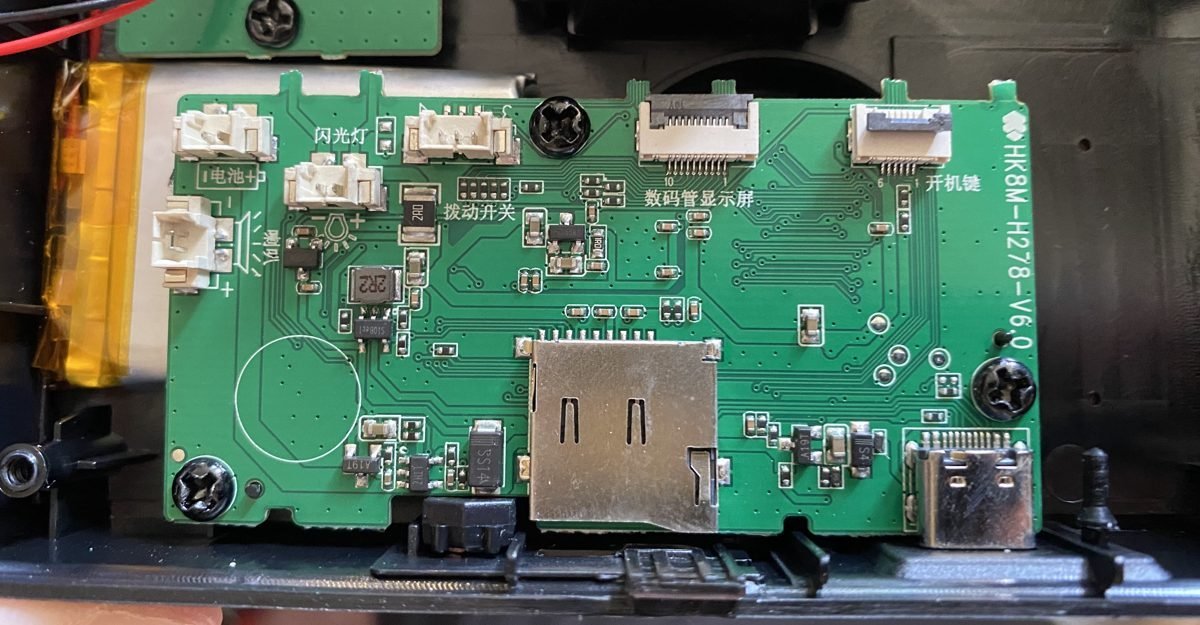
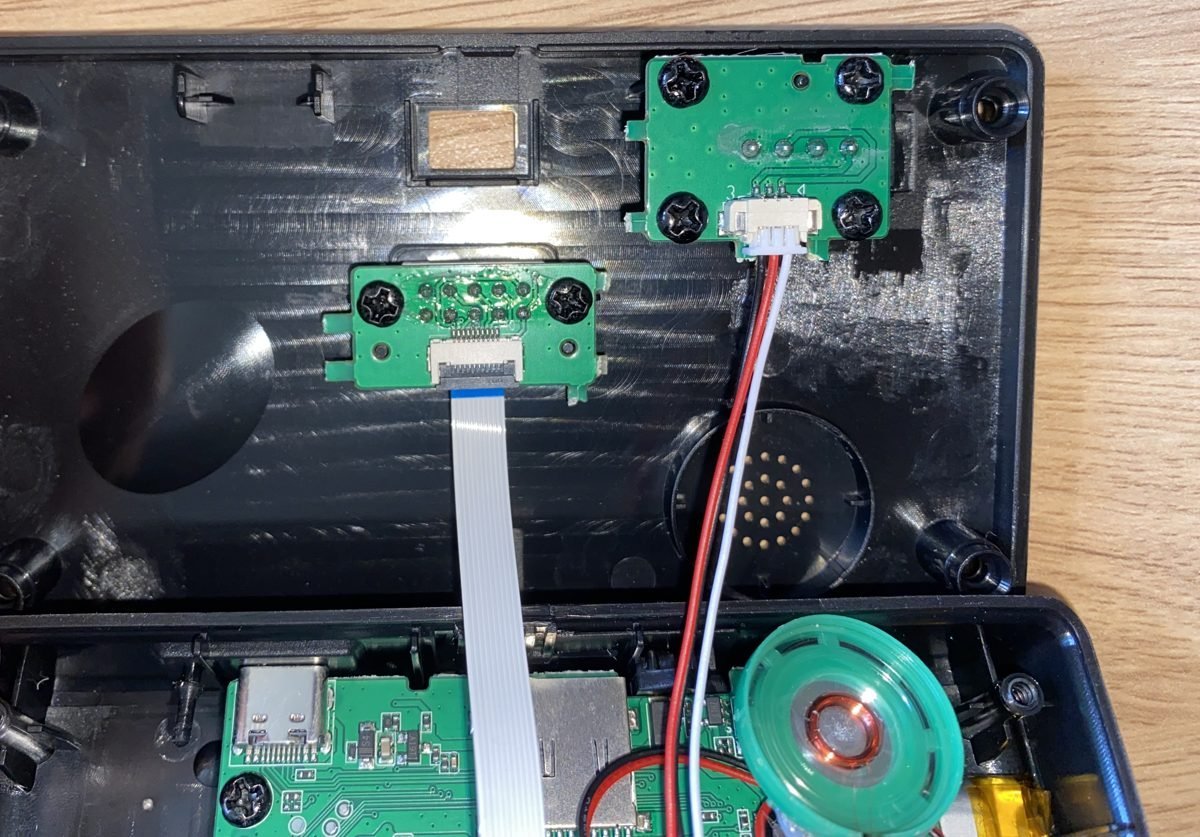
Electrons are coerced through the thing by a 600mAh LiPo charged over USB-C, and photos go on a microSD card which also works over USB. (They do encourage you to transfer files over USB, the microSD slot is screwed shut so you can't lose the card.) All a big upgrade on that AAA, 2MB and a proprietary cable.
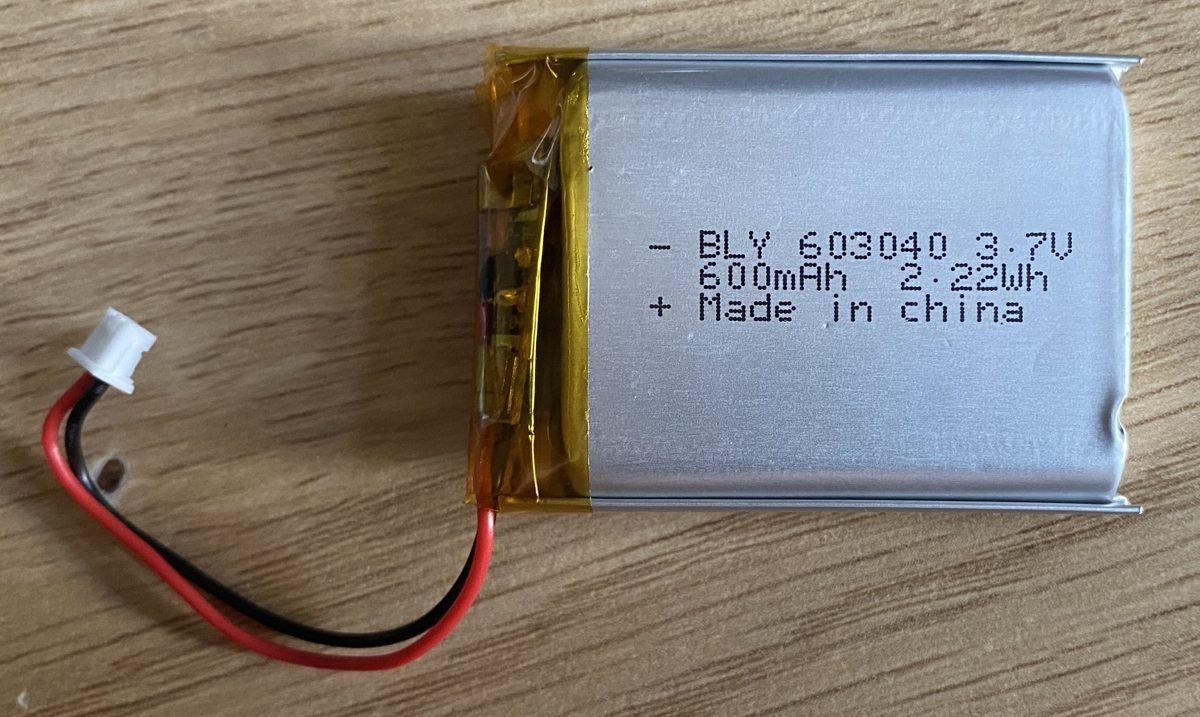
I appreciate that it's easy to take apart. A few big screws, unplug the battery, done. That really matters when it comes to disposal, because putting lithium batteries in the bin is NOT a good idea. Most cheap electronics have tiny screws or infuriating plastic clips holding them shut or even glue the battery in, whereas this is much easier to remove and recycle.
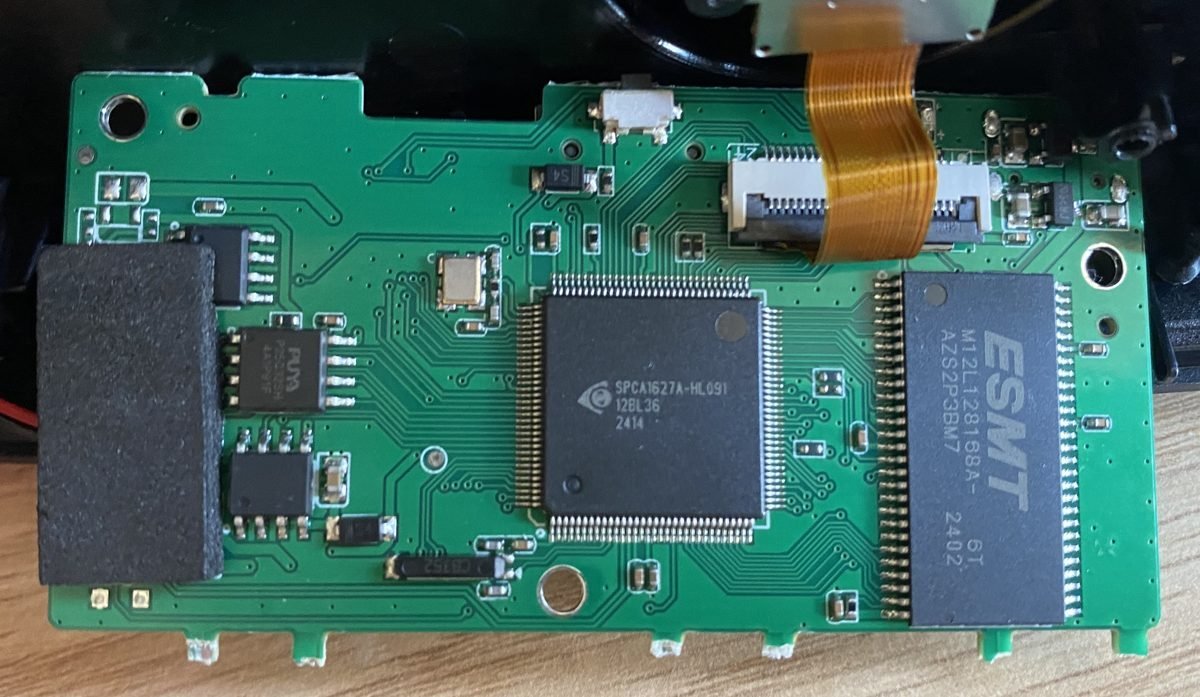
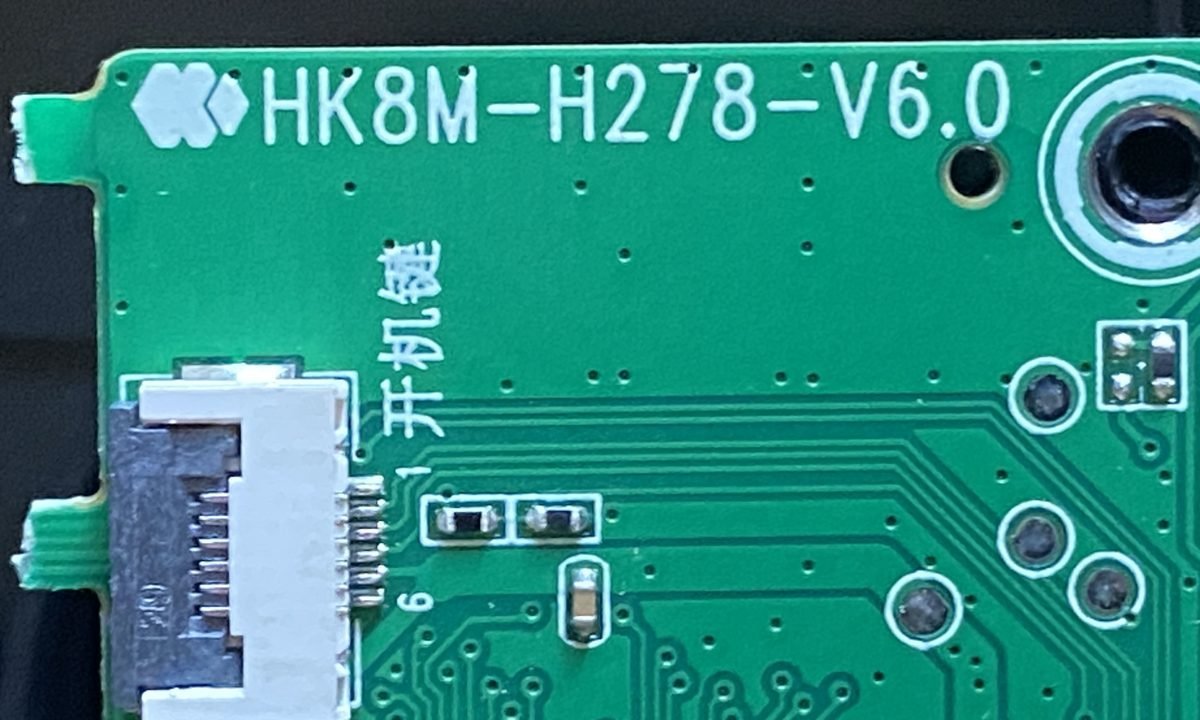
The board is labelled HK8M-H278-V6.0, and the silkscreen is in Chinese. 闪光灯 (flash), 电池 (battery), 拨动开关 (slide switch), 数码管显示屏 (seven-segment display) and 开机键 (power button). That doesn't prove anything on its own since nearly everything is made in China, but it does appear unlikely that the board was designed in the founders' California garage.[1][3]
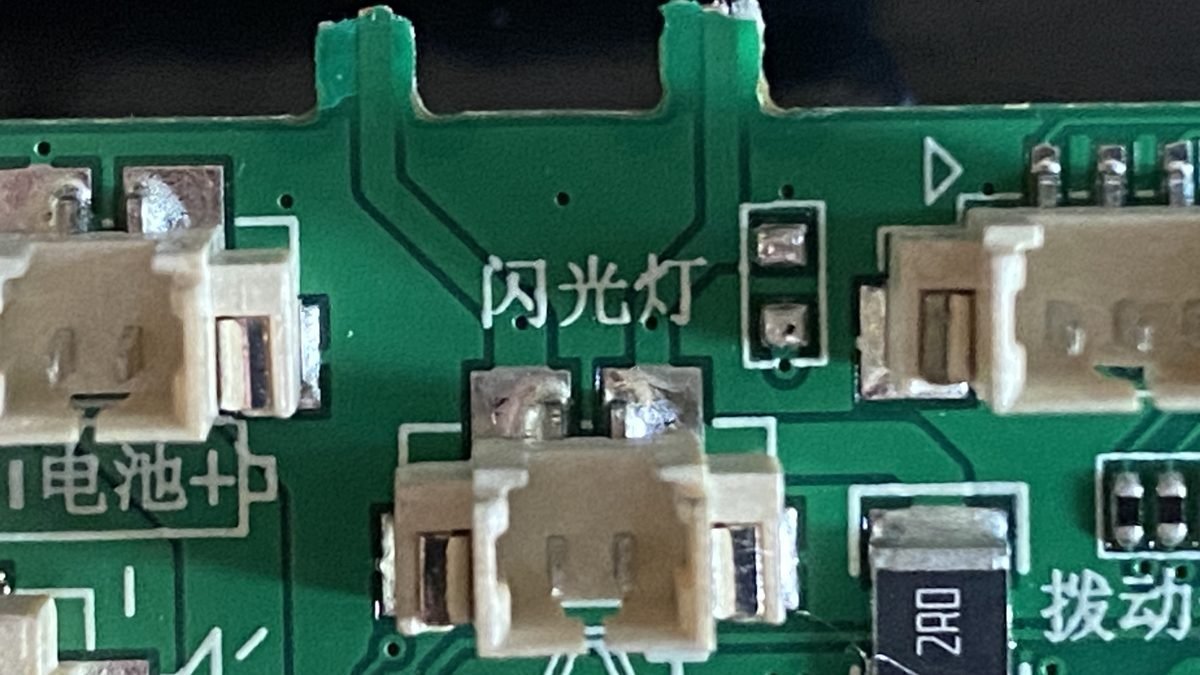
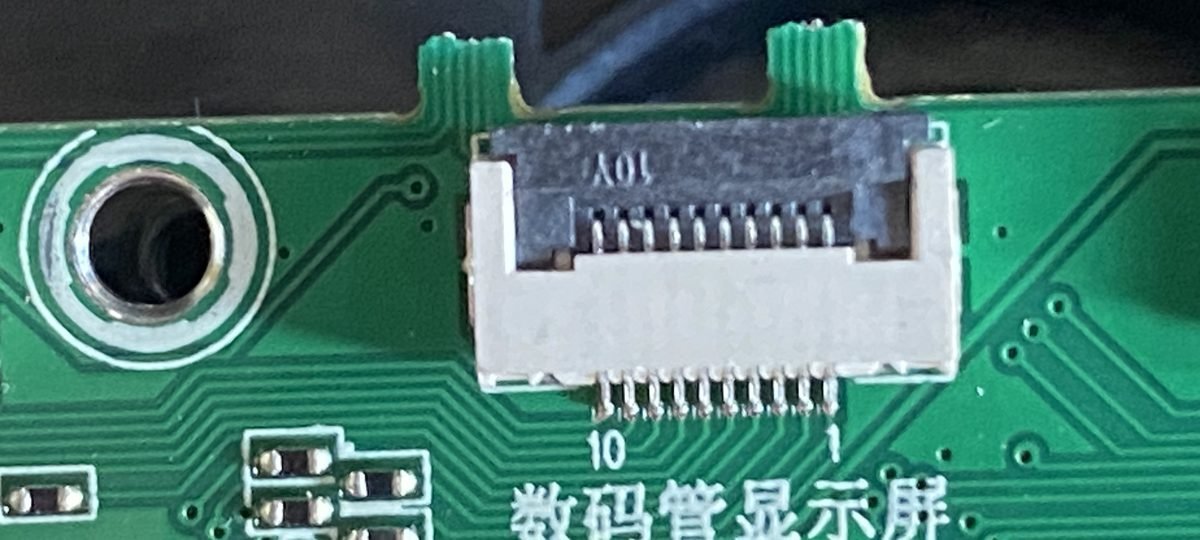
The old keychain cameras always had unlit two-digit LCDs which made sense when you were running off one AAA, whereas here we've got 3 red LED digits. With a rechargeable battery, the LEDs' extra power doesn't matter much and I guess you can also read them in the dark; although I'm not sure this camera would have great low light performance.
It's quite odd that the tabs along the board's edges have been snapped off with traces still running into them, with bare copper at the break. They're not clean mouse bites, more rat gnaws. My guess is the main board and the little boards for the flash, buttons, and display were made as one connected board, snapped apart, and rejoined with wires and ribbon cables. Maybe it was designed as an evaluation board, or it could just be for testing in the factory.
The chips:
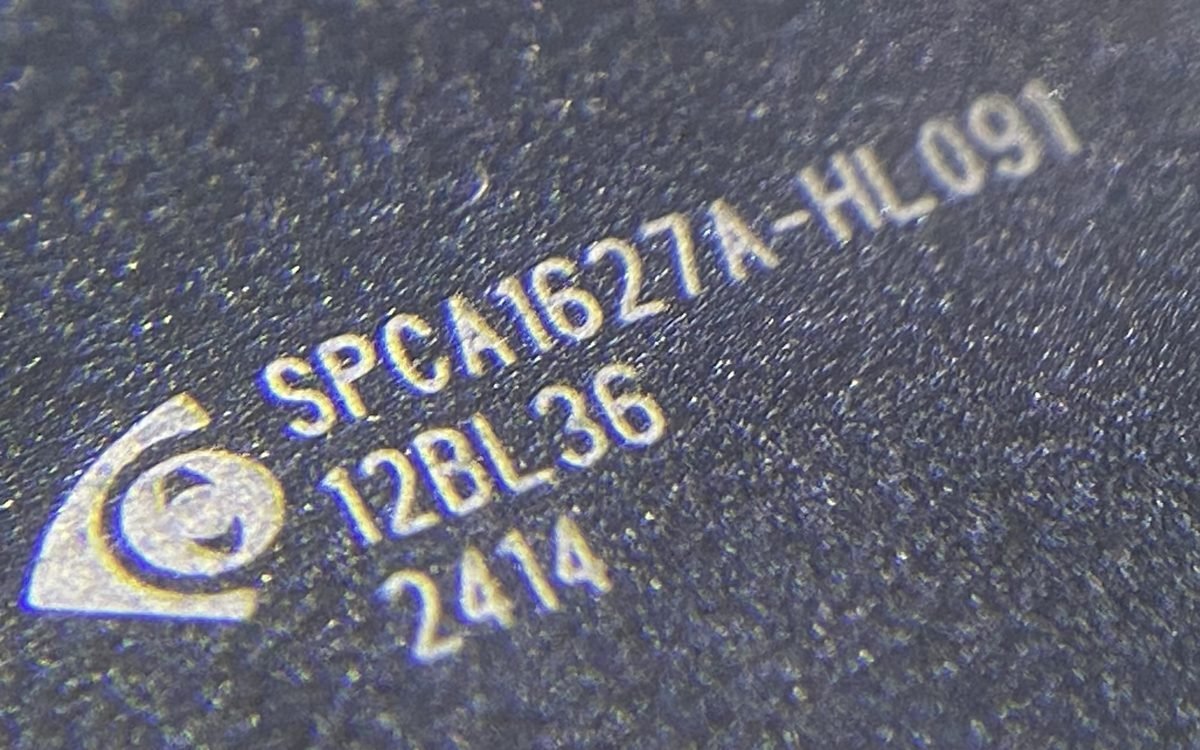
- iCatch SPCA1627A, the processor that runs the whole thing
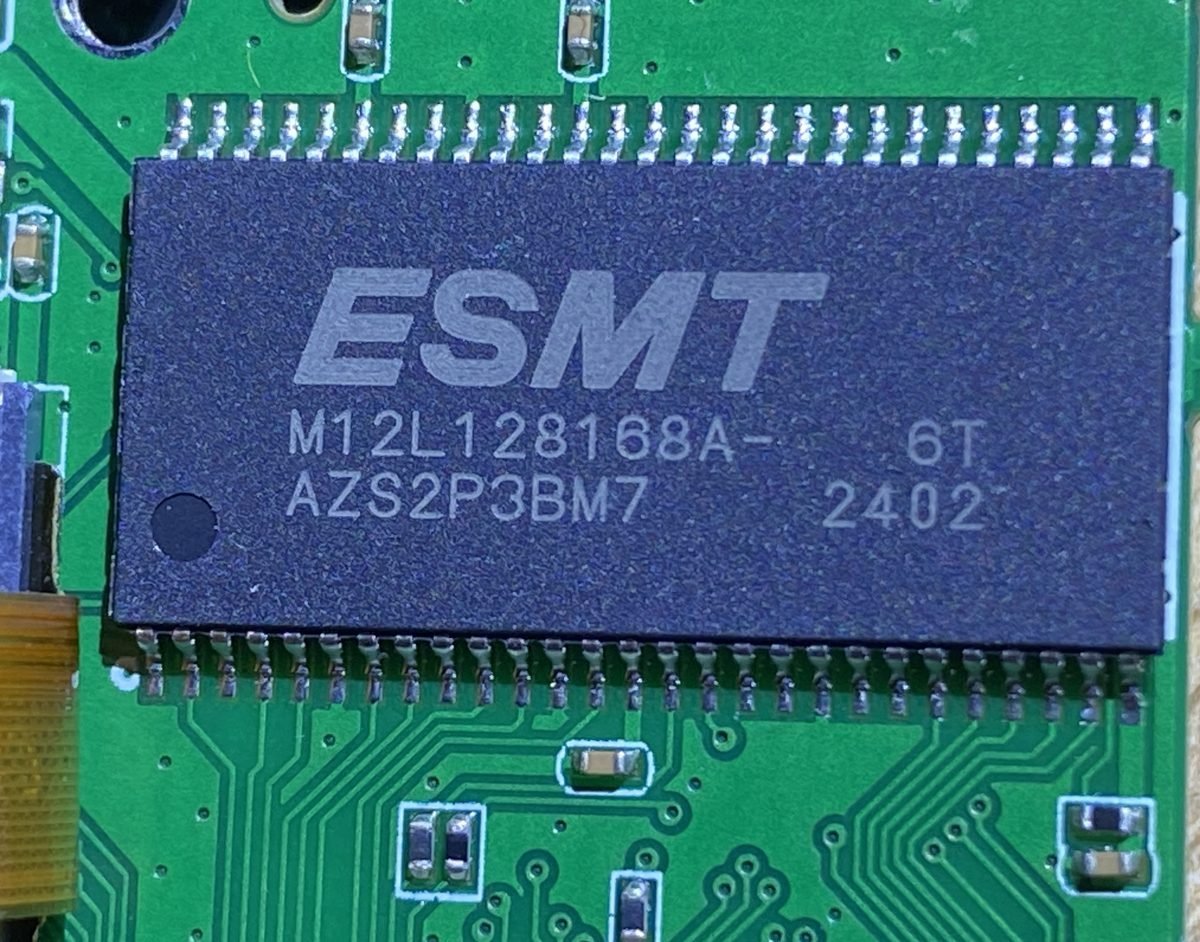
- ESMT M12L128168A, 16MB of RAM
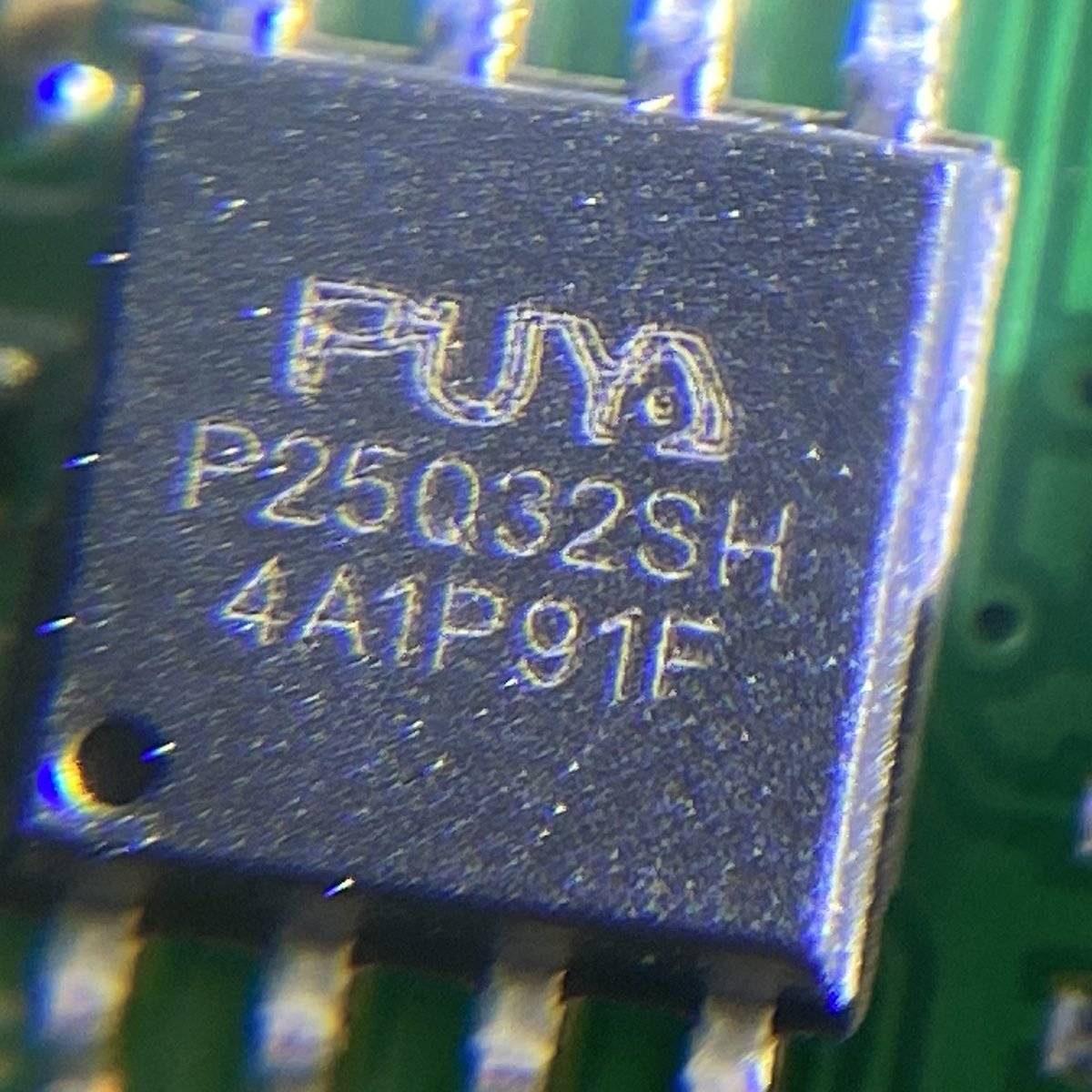
- PUYA P25Q32SH, 4MB of flash for the firmware
- a 27 MHz crystal oscillator
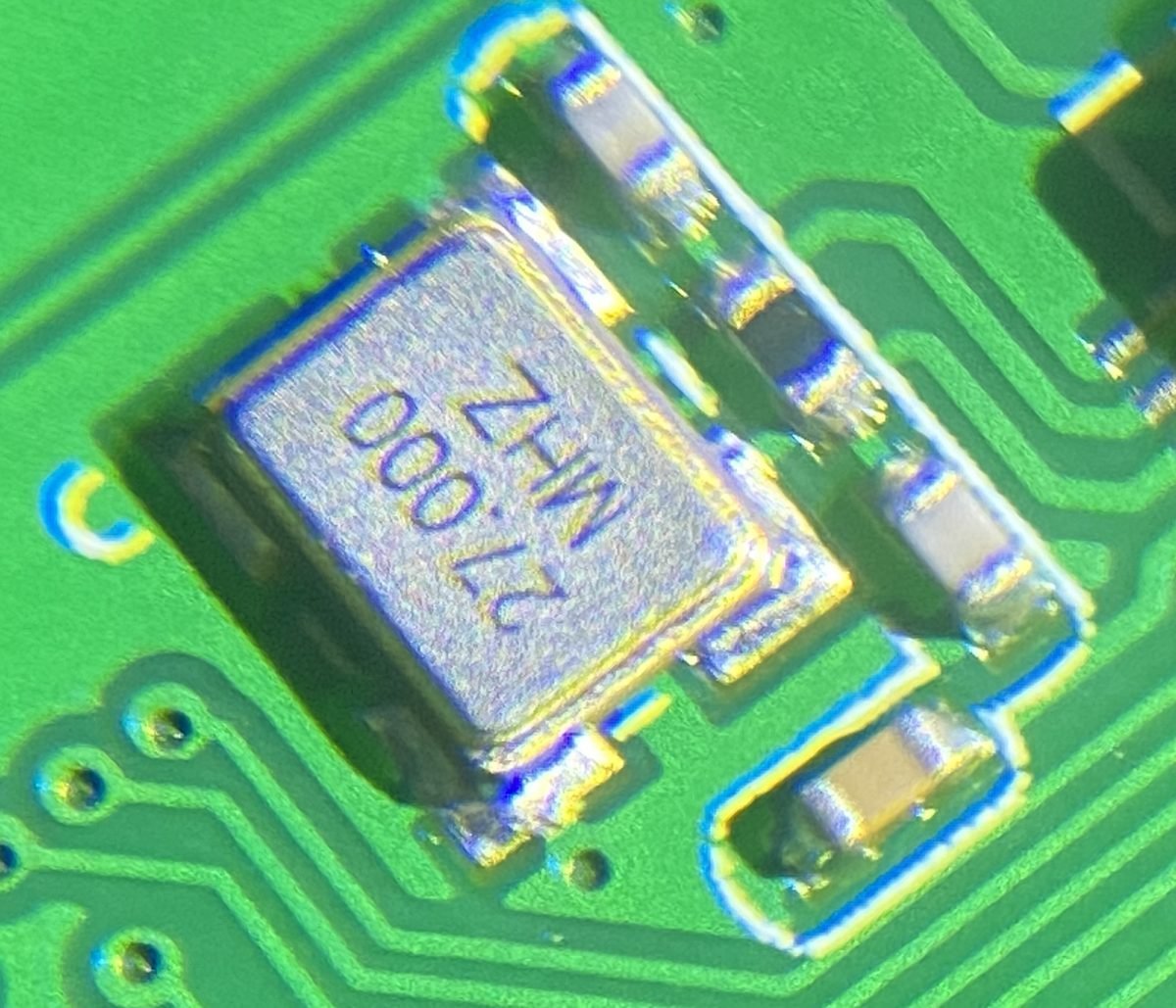
Same recipe, better ingredients
Like the keychain cameras, it's a whole camera on one cheap chip that reads the sensor, saves the photo, drives the counter and speaks USB. The old keychain ones ran on cheap chips like the SN9C2028[6] or the SQ905, which went into dozens of no-name cameras.[7] The Camp Snap's has a closer relative in another bargain-bin classic: the "808" car-key-fob spy cameras ran on a Sunplus SPCA1527.[8] Add a better sensor, rechargeable battery, a memory card, and an extra digit, and it's the camera I had as a kid.
It's certainly not the hand-soldered, 3D-printed kind of thing someone makes in batches of twenty and sells on Tindie. But it isn't quite a rebadged white-label product either: the custom case and upmarket repositioning are Camp Snap's own. The insides look fairly sparse and uninteresting.
Changing the filter
The software filters are where the Camp Snap really differentiates itself. The filter applies to every photo you take once installed; to change or remove it on this model you download firmware, copy files onto the memory card in a specific order and restart it twice. Here's how Camp Snap's instructions put it:
ONLY INSTALL THIS SOFTWARE IF YOUR CAMERA IS A V.101. IF YOUR CAMERA DOES NOT HAVE A RED 3 DIGIT LED PHOTO COUNTER THEN THIS FIRMWARE WILL PERMANENTLY BREAK YOUR CAMERA AND WILL VOID THE WARRANTY.[9]
**** ONLY INSTALL ONE UPDATE AT A TIME -- IF YOU COMBINE YOU WILL BRICK YOUR CAMERA ****[9]
Fun for all the family, I guess? And it does happen. One owner bricked theirs with a full battery and the file in the right place, and support "basically just repeated the instructions verbatim".[10] The main firmware file is called 1628.BIN,[9] which I suspect isn't a coincidence given the chip.
So who is it for?
I'm very plainly not the target market for this. If you want 2000s camera vibes, you can easily buy a used digital camera from cash converters. They cost nothing, take SD cards, and come in whichever quality point you want. Yes, they have screens, but I can attest that they aren't difficult to break if you need one without. The Camp Snap feels like cheap hollow plastic, and the user experience is a little disappointing for the price.
But nobody is buying these for the specs! They buy them for the nostalgia, the experience, and an effective marketing campaign. My friends love theirs! It's great that people are using actual cameras again. It's not good for anyone's wellbeing to be picking up the same black depression rectangle for every daily task. I just wouldn't update the firmware...
References
- Camp Snap, "About us". Retrieved 3 November 2026.
- NPR, "The 2000s called, they want their digital camera back", 18 July 2026. Camp Snap says it has sold over a million cameras.
- Camp Snap, "Why Screen-Free Matters: The Story Behind CampSnap". Retrieved 3 November 2026.
- If you lent me a Camp Snap camera in late 2024 and are now discovering I took it to pieces, congratulations!
- "Camp Snap 2 launches with slimmer design, built-in filters, and same $69.95 price".
- The Linux kernel documentation, "GSPCA card list" (sn9c2028: "Sakar #11199, #6637x, #67480 keychain cams"). Retrieved 3 November 2026.
- Theodore Kilgore, "README.sq905", libgphoto2: "These cameras are cheap, basic, and come in many brands and models". Retrieved 3 November 2026.
- "808MicroCam", open firmware project for the 808 keychain camera, GitHub.
- Camp Snap, "Legacy V101 firmware". Retrieved 3 November 2026.
- r/campsnapcamera, "Replacement arriving in a couple of days, trying to not brick this one!", Reddit, 2025.




